Applications
Washing
Technical definition
Washing using industrial brushes is a mechanical process used to remove dirt, residues, oils, dust, or contaminants from parts, surfaces, or products during industrial processes. This function combines the mechanical action of the filament with water, detergents, or other cleaning liquids to improve the efficiency of the washing process.
Brushes allow for a controlled scrubbing action on the surface of the material, detaching contaminants that cannot be removed solely by rinsing or liquid spraying. Thanks to the flexibility of the filament, the brush can adapt to the geometry of the parts and access areas where other cleaning systems are not effective.
Washing with industrial brushes is widely used in automatic cleaning machinery, industrial washing tunnels, surface treatment equipment, and production lines where it is necessary to keep parts or products free of residues before subsequent processes such as assembly, inspection, coating, or packaging.
Types of brushes for washing parts in industrial processes
The brushes used for industrial washing can adopt different configurations depending on the type of part, the washing system, and the required level of cleanliness.
These brushes are also offered as custom technical solutions, tailor-made to adapt to the particular circumstances within each production environment.
| Brush type | Main application | Recommended filament | Format |
|---|---|---|---|
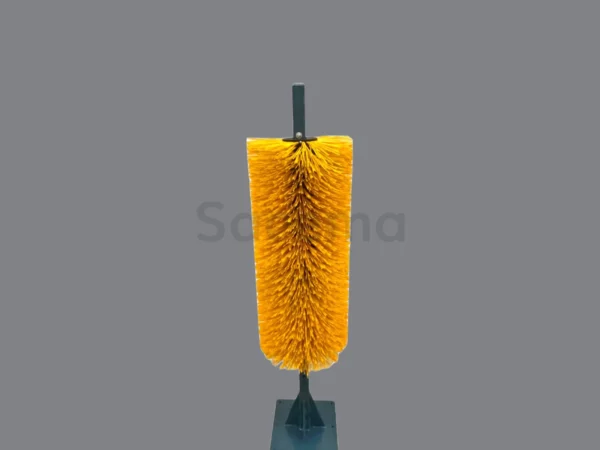
| Cylindrical washing brush | Cleaning and washing parts in rotary machinery | Nylon, PBT | Custom-made |
| Strip washing brush | Washing and scrubbing surfaces in machinery | Nylon, polypropylene | Aluminum profile |
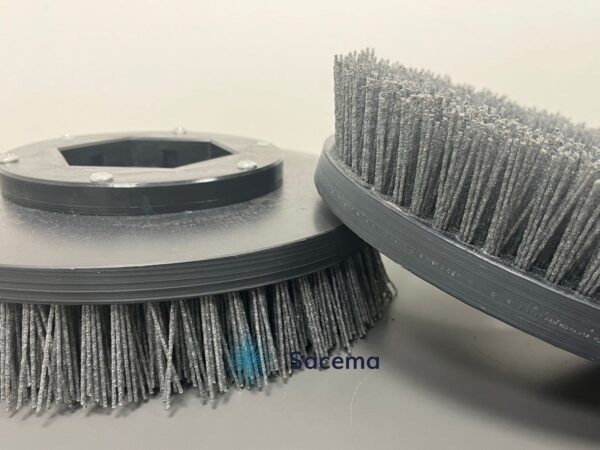
| Disc washing brush | Localized washing on parts | Nylon, abrasive | Metal core |
Cylindrical brushes for industrial washing
Cylindrical brushes are one of the most widely used solutions in industrial washing systems. The rotary movement of the filaments generates a continuous mechanical action, which, combined with the flow of water or detergent, facilitates the removal of residues, grease, or particles adhered to the surface.
This type of brush is commonly used in continuous washing systems such as washing tunnels, cleaning tunnels, and surface treatment equipment where parts go through different washing and rinsing stages.
This type of brush is usually custom-made to adapt to the dimensions of the washing equipment and the geometry of the parts.
Strip brushes for surface washing
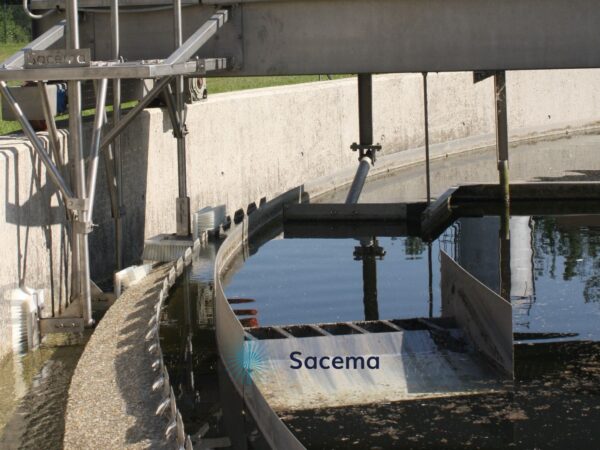
They are installed in cleaning equipment, industrial maintenance systems, or machinery.
Strip brushes can be used to wash surfaces in industrial machinery where a light but continuous scrubbing action is required. Their modular design allows them to adapt to different machinery configurations.
Disc brushes for localized washing
This type of brush provides localized washing by applying a higher cleaning intensity to specific points of the process, especially when abrasive filaments are used.
They are used in surface treatment machinery, technical cleaning equipment, or parts preparation systems before subsequent processes, where it is necessary to concentrate the washing action.
The tufts can be placed perpendicularly to their base, or radially towards the outside of the brush.
Applications by sector
Washing using industrial brushes is applied in numerous sectors where it is necessary to clean parts or products during different stages of the production process.
Food industry
In the food industry, industrial brushes are used to wash products, production equipment, and surfaces that must be kept free of residues and contaminants. They are also used in washing systems for fruits, vegetables, or food products before processing or packaging.
Packaging industry
In packaging lines, washing brushes can be used to clean containers, bottles, or components before filling or labeling. Proper washing ensures that the packaging is in optimal condition for the packaging process.
Metallurgical industry
During metal parts manufacturing processes, washing with brushes removes oils, machining emulsions, or metal particles before subsequent processes such as painting or surface treatment.
Automotive industry
In the manufacture of automotive components, industrial brushes are used in automatic washing equipment to clean parts before assembly or inspection. This helps ensure the quality of the final product and the correct operation of the components.
Plastics industry
In the production of plastic parts, washing brushes allow the removal of dust, material remnants, or contaminants before subsequent processes such as assembly, transformation, or packaging.
Technical selection of the washing brush
The selection of an industrial brush for washing applications must be made considering several factors related to the cleaning process.
The type of dirt to be removed: light residues such as dust or particles require soft filaments, while more adhered contaminants may require stiffer or abrasive filaments.
The material of the part to be washed: delicate surfaces require filaments that allow cleaning without damaging the material.
The speed of the washing process and the type of machinery: in continuous washing systems, it is important to ensure that the brush can maintain effective contact with the part throughout the process.
Working conditions: factors such as water temperature or the presence of cleaning chemicals must also be taken into account to select filaments with the appropriate resistance.
The design of the brush must adapt to the geometry of the parts, the materials and chemicals used, and the configuration of the industrial washing system.
The geometry of the equipment will determine the most suitable type of brush; options include cylindrical, strip, or disc brushes, as well as custom-made technical solutions.
Related products


FAQ
What are industrial brushes used for in washing processes?
Industrial brushes are used to remove dirt, residues, or contaminants from parts and surfaces through a mechanical action combined with water or cleaning products.
Which filament is most suitable for washing brushes?
The most commonly used filaments for industrial washing are nylon and PBT, as they offer good resistance to water, cleaning chemicals, and mechanical wear.
Can brushes be used in automatic washing machinery?
Yes. Industrial brushes are frequently integrated into washing tunnels and automated cleaning equipment to improve the efficiency of the process.
Can washing brushes be custom-made?
Yes. The brushes used in industrial washing systems are usually custom-made to adapt to the machinery and the characteristics of the parts to be cleaned.