Sectors
Technical Brushes for Machinery Manufacturers and Distributors
Machinery Manufacturers and Distributors
Industry Context
Manufacturers and distributors of industrial machinery play a fundamental role in modernizing production processes across multiple sectors, such as the food, agricultural, automotive, logistics, recycling, glass, metal, and packaging industries, among others.
These companies design, integrate, or supply equipment that forms part of complex production lines, where each component must fulfill a specific function with high standards of reliability.
In this context, technical industrial brushes have become standard functional components in numerous types of machinery. Their versatility allows them to be integrated into equipment to perform tasks such as cleaning, product transport, sealing, guiding, protection, or surface treatment.
For machinery manufacturers, selecting the right brush is a critical engineering issue. The brush must integrate perfectly into the equipment’s design, withstand the expected working conditions, and guarantee reliable operation over long periods of use.
Furthermore, each machine may require specific brush configurations tailored to exact dimensions, rotational speeds, environmental conditions, or the characteristics of the processed material. For this reason, in many applications, industrial brushes are designed as custom-made technical components, manufactured according to the machine builder’s specifications.
Another important aspect is that machinery manufacturers must ensure the components used comply with the regulations applicable to the machine’s target sector. This can include food contact certifications, industrial safety requirements, or chemical resistance in harsh environments.
Consequently, industrial brushes are not only used as cleaning tools but also as engineering elements integrated into the functional design of the machinery, helping to improve equipment performance, safety, and efficiency.
Brushing Applications in Industrial Machinery
In-Process Surface Cleaning
In many industrial machines, it is necessary to remove residues, dust, or particles generated during the equipment’s operation.
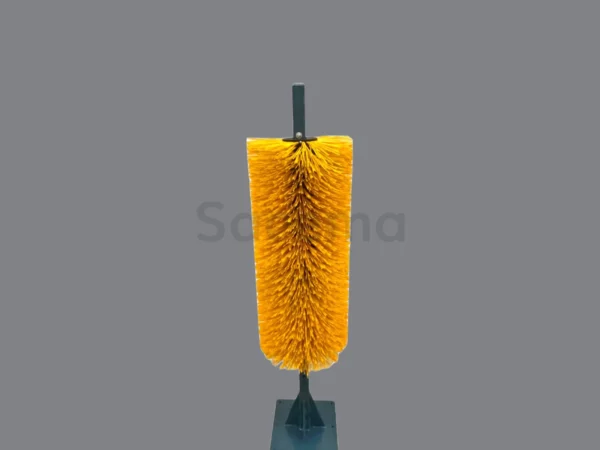
Rotary cylinder brushes are used to clean work surfaces, mechanical components, or processed materials while the machine is running.
This type of solution is used in machinery for sectors such as glass, metal, wood, or plastic, where the accumulation of residues can affect the quality of the final product or the operation of the equipment.
The most commonly used filaments are technical nylon or polypropylene, selected based on the required level of abrasion and the type of material to be cleaned.
Integrating brushes into the machine allows for continuous in-process cleaning, reducing maintenance downtime.
Product or Material Transport
In certain industrial machines, brushes are used as transport or support elements for the product.
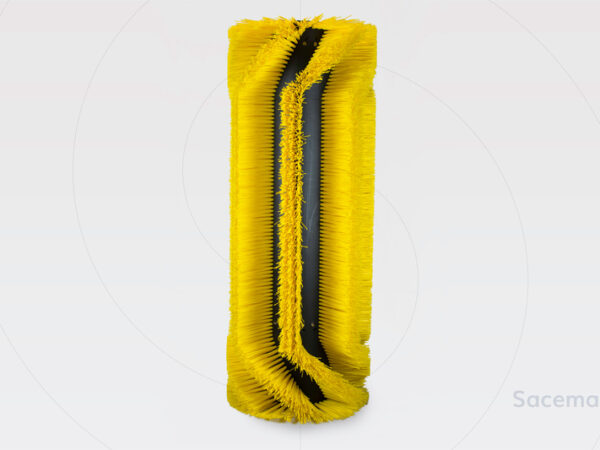
Spiral brushes mounted on shafts create flexible surfaces that allow parts or materials to be moved without damaging them.
On the other hand, brush roller tables allow the product to be moved carefully and in a straight line during the transport process.
These systems are especially useful when handling delicate products or sensitive surfaces, such as glass, electronic components, or certain plastic materials.
The filaments used in these applications are generally soft nylon, polypropylene, or special technical fibers, selected to minimize friction and prevent damage to the transported material.
Material Guiding and Positioning
In many production lines, it is necessary to guide or position parts or materials as they move through the machinery.
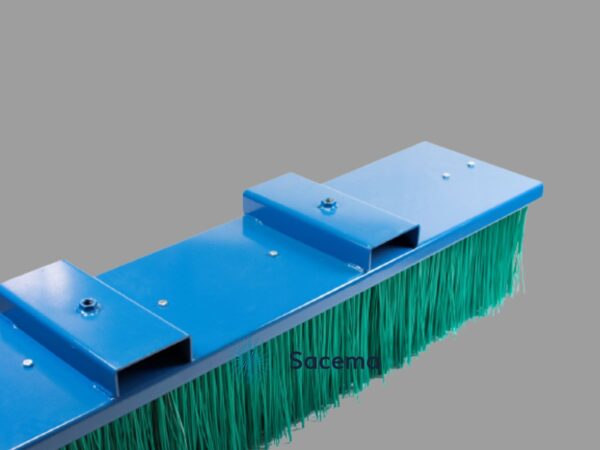
Inserted strip brushes or lath brushes are frequently used as flexible guiding systems that keep the material in the correct position without exerting excessive pressure.
This type of solution is common in packaging machines, sheet handling equipment, conveyor lines, or sorting systems.
The filament is normally polypropylene or nylon, selected based on the required flexibility and process speed.
Using brushes as guides helps reduce material wear and prevents damage to the handled products.
Machinery Sealing and Protection
Inserted strip brushes or brush laths are frequently used as flexible sealing systems in industrial machinery.
These brushes close openings or gaps between machine components while simultaneously allowing materials or parts to pass through.
This type of solution is used to prevent the entry of dust or contaminants, reduce drafts, and protect the machinery’s internal components.
The most commonly used filaments in these applications are normally polypropylene or technical nylon, chosen based on the machine’s environmental conditions. In these cases, it can be ideal to implement antistatic filaments that absorb the static electricity generated by the equipment’s operation.
Sealing brushes also help improve equipment safety by protecting certain areas from direct access.
Material Surface Treatment
In some industrial equipment, brushes are used to perform surface treatment operations on processed materials.
These operations can include tasks such as light deburring, surface cleaning, the application of surface treatments, or the preparation of materials prior to subsequent processes.
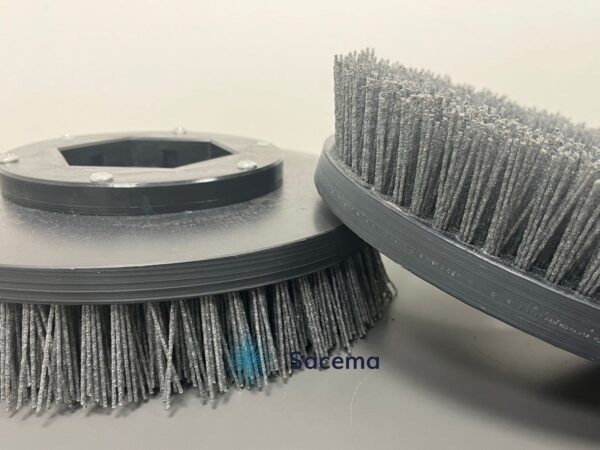
In these applications, technical brushes specifically designed for the process are used, featuring filaments that can be made of technical nylon, abrasive fibers, or special materials.
Selecting the filament type and brush density is crucial to achieving the desired result without damaging the part.
Standards and Materials for Machinery Brushes
Machinery manufacturers must select components that comply with the technical and regulatory requirements of the equipment’s target sector.
From the perspective of industrial brushes, one of the most important aspects is the compatibility of the materials with the machine’s working conditions.
The most commonly used materials for industrial filaments include:
Polypropylene (PP): Good chemical resistance and competitive cost.
Nylon (PA): High mechanical strength and durability.
Abrasive fibers: Used in finishing or deburring processes.
In applications intended for specific sectors, brushes may require additional features or certifications, such as:
Food-grade materials suitable for food contact (according to FDA or EU Regulation 10/2011).
Chemical resistance to detergents or solvents.
Compatibility with humid environments or high temperatures.
Furthermore, brushes used as machinery components must offer high precision and stability during operation, especially when working at high speeds. The brush design must also adapt to the fastening or mounting systems provided by the machine manufacturer.
Technical Solutions Table
| Process | Problem | Recommended Brush | Filament |
|---|---|---|---|
| Process cleaning | Residue on surface | Cylindrical brush | Technical nylon |
| Transport | Delicate product | Spiral brush | Soft nylon |
| Guiding | Material deviation | Linear strip brush | Flexible PP |
| Sealing | Dust ingress | Inserted strip brush | PP or nylon |
| Surface treatment | Light deburring | Abrasive technical brush | Abrasive nylon |
Related Products
Frequently Asked Questions about Machinery Brushes
Can custom brushes be manufactured for a specific machine?
Yes. The majority of industrial brushes used in machinery are manufactured according to the dimensions and specifications of the equipment.
What type of brush is used to clean machinery during the process?
Rotary cylinder brushes are the most commonly used for continuous cleaning while the machine is running.
Can brushes be used to transport products?
Yes. Spiral or cylinder brushes can act as transport surfaces for delicate products.
What materials are used for the filaments?
The most common are polypropylene, nylon, and technical abrasive fibers.
Can brushes be integrated into high-speed machines?
Yes, provided they are specifically designed for the speed and working conditions of the machine in question.