Sectors
Brushes for Recycling Plants and Waste Treatment
Recycling and Waste Treatment
Industry Context
The recycling and waste treatment sector is a fundamental part of the circular economy and sustainable resource management. Treatment plants process large volumes of waste from urban collection, industry, construction, or commercial activities, with the aim of sorting, separating, and recovering reusable materials such as plastics, paper, metals, glass, or organic waste.
Recycling facilities typically consist of automated sorting lines, which include conveyor systems, mechanical separators, screens, trommels, optical sorters, shredders, and compactors. In these systems, industrial brushes play an important role in tasks such as equipment cleaning, material separation, removal of adhered waste, and maintenance of conveyor lines.
One of the main challenges in this sector is the variability of the processed waste. Recycling plants handle materials of different sizes, densities, shapes, and moisture levels, creating demanding working conditions for mechanical equipment.
Furthermore, waste can contain abrasive elements, dust, moisture, or chemical contaminants, so the components used in the machinery must offer high wear resistance and durability.
In this context, industrial brushes are used as technical solutions to improve the efficiency of separation processes, keep conveyor lines clean, and prevent material buildup that could affect plant performance.
The correct selection of brush type, filament, and design is important to optimize equipment operation, reduce maintenance downtime, and improve the sorting quality of recyclable materials.
Brushing Applications in Recycling and Waste Treatment
Cleaning of waste conveyor belts
Conveyor belts are one of the most commonly used elements in recycling plants to move waste between the different stages of the process.
During material transport, it is common for waste to generate accumulations of dust, small fragments, or materials adhered to the belt. This can affect the operation of the conveyor system and cause deviations, jams, and ultimately, line stoppages.
One solution is the installation of belt cleaners at strategic points in the conveyor system to remove this waste and keep the belt in optimal condition.
It is also possible to install a cross-cleaning system in specific cases where lateral waste evacuation is required.
Material separation and sorting
In some stages of the recycling process, industrial brushes are used as mechanical elements to facilitate the separation of certain materials.
For example, in packaging or light waste recycling lines, rotary brushes can help separate materials that are mixed or stuck together.
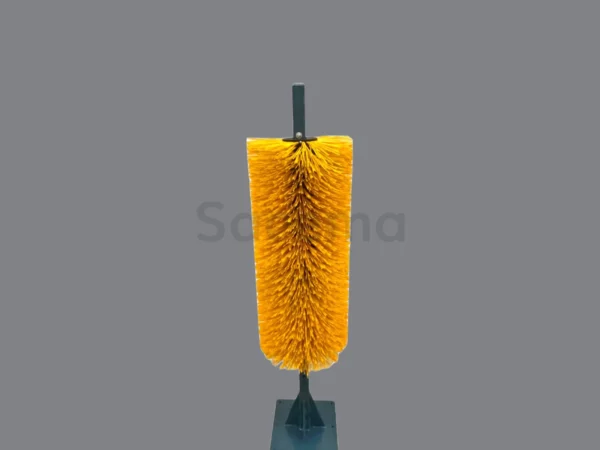
High-density rotary cylinder brushes allow waste to be moved or agitated to facilitate its subsequent sorting by optical or mechanical systems.
The filament used depends on the type of material processed, although technical nylon or reinforced polypropylene are usually used to guarantee good wear resistance.
Cleaning of sorting drums and trommels
Screening trommels are rotary equipment used to separate waste according to its size. During the operation of this equipment, waste can accumulate in certain areas of the drum or in the discharge systems.
Industrial brushes can be installed in this equipment to clean the trommel surfaces and prevent the accumulation of materials that could reduce screening efficiency.
In these applications, heavy-duty technical brushes capable of working in contact with abrasive materials are commonly used.
The most common filaments are usually technical nylon or reinforced polypropylene, selected to withstand demanding working conditions.
Cleaning of shredding machinery
Recycling plants often incorporate waste shredding or fragmentation equipment to reduce the size of the materials prior to sorting.
During these processes, large amounts of dust and small fragments are generated that can accumulate in different parts of the machinery.
Technical brushes installed in specific areas of the equipment allow these residues to be removed, keeping the work surfaces clean.
Depending on the process conditions, technical nylon, polypropylene, or combinations with steel filaments can be used to increase cleaning capacity.
Machinery sealing and protection
Waste treatment plants generate large amounts of dust and airborne particles. This dust can affect the operation of certain equipment or electrical systems.
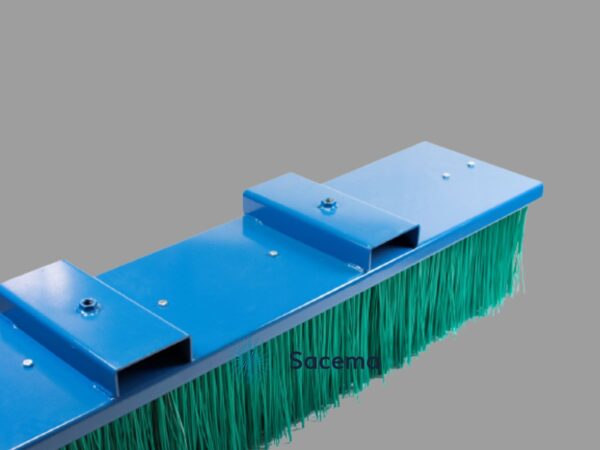
Strip brushes are used as flexible sealing systems on machinery doors, conveyors, or material transit areas.
These brushes allow the movement of waste while acting as a barrier against dust and particle dispersion.
The most used filaments in these applications are usually polypropylene or nylon, selected based on the required wear resistance.
Facility cleaning
In this type of facility, continuous cleaning of floors and areas adjacent to the treatment line is commonly required.
The push brush adapted for forklifts is an excellent option for removing the general accumulation of waste generated by the center’s operation, allowing for periodic and effective cleaning of the facilities.
The filaments used in this brush are usually polypropylene, either alone or together with steel fibers if greater abrasion is needed
Regulations and Materials in Recycling Applications
Recycling and waste treatment facilities must comply with various regulations related to industrial safety, environmental protection, and occupational risk prevention.
From the point of view of industrial brushes, one of the most important aspects is the resistance of the materials to demanding working conditions.
Processed waste may contain abrasive materials, moisture, chemicals, or contaminants, so the filaments used in the brushes must be able to withstand these conditions without degrading quickly.
Polypropylene (PP) is one of the most widely used materials due to its good chemical resistance, low moisture absorption, and competitive cost.
Nylon (PA) is also used in applications where greater mechanical resistance or greater stability against wear is required.
In certain industrial applications, it may also be necessary to consider requirements related to protection against explosive atmospheres (ATEX), especially in facilities where large amounts of combustible dust are generated.
In addition, brushes must be designed to facilitate equipment maintenance and prevent waste buildup that could affect machinery operation.
Technical Solutions Table
| Process | Problem | Recommended Brush | Filament |
|---|---|---|---|
| Waste Conveying | Build-up on conveyor belt | Cylindrical cleaning brush | High-strength PP |
| Sorting | Material build-up | Cylindrical separation brush | Technical nylon |
| Trommel | Waste accumulation | Technical brush | Reinforced PP |
| Shredding | Dust and debris | Technical brush | Technical nylon |
| Machinery | Dust dispersion | Strip sealing brush | PP or nylon |
Related products

Frequently Asked Questions about Brushes in Recycling
What type of brush is used to clean waste conveyor belts?
Cylindrical polypropylene or nylon brushes are most commonly used to remove waste adhered to conveyor belts. However, belt-type brushes are also used.
Can brushes work with abrasive materials?
Yes. There are filaments specifically designed to withstand working conditions with abrasive materials.
Can specific brushes be manufactured for trommels or recycling machinery?
Yes. It is common practice to manufacture custom brushes to adapt to the specific characteristics of each piece of equipment.
What materials are commonly used in this sector?
The most common are polypropylene and technical nylon due to their resistance to wear and moisture.
Do brushes help reduce the maintenance of recycling lines?
Yes. Brushing systems help prevent waste buildup and improve the overall efficiency of the equipment.