Applications
Water treatment
Technical Definition
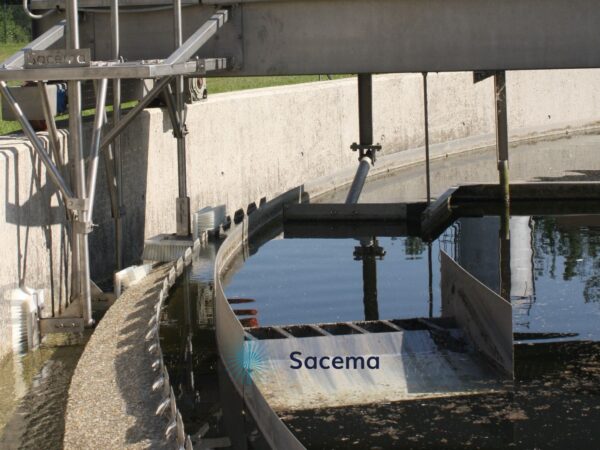
In the water treatment sector, industrial brushes are used to perform cleaning, conveying, supporting, and maintenance functions at different stages of the purification and filtration processes.
Their main function is to remove solid waste, biofilm, sludge, or scale that accumulates on equipment and structures during the treatment of wastewater or white water.
Thanks to the flexibility of their filaments and their ability to adapt to different geometries, brushes allow complex surfaces to be cleaned without damaging the equipment.
The brushes are integrated into machinery and purification systems to ensure the proper functioning of filtering elements such as screens, decanters, or other solid separation systems.
The use of industrial brushes in water treatment plants contributes to improving process efficiency, reducing equipment maintenance costs, and preventing blockages that could affect the performance of the facilities.
Types of Brushes Used in Water Treatment
Purification processes use different types of industrial brushes depending on the type of facility, the equipment they are integrated into, and the type of waste to be removed. These brushes are also offered as customized technical solutions, tailor-made to adapt to the specific circumstances of each production environment.
| Brush Type | Main Application | Recommended Filament | Format |
|---|---|---|---|
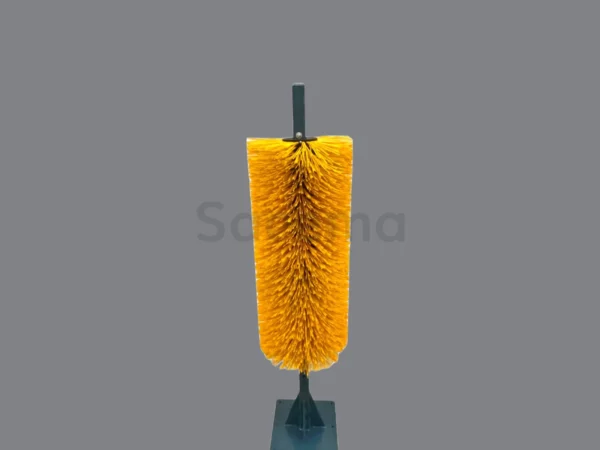
| Cylindrical Brush | Cleaning rotating sieves and filters | Nylon, polypropylene | Custom-made |
| Strip Brush | Cleaning grilles and filtration equipment | Nylon, polypropylene | Aluminum profile |
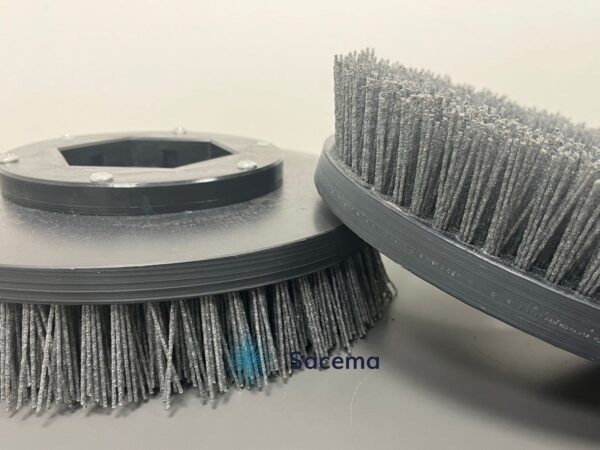
| Disc Brush | Localized equipment cleaning | Nylon, abrasive filament | Metal core |
Cylindrical brushes for filters and sieves.
The rotary movement of the brush helps detach particles and prevent blockages that could reduce the efficiency of the filtration system. Cylindrical brushes of this type are typically integrated into automatic purification equipment. They are frequently used in rotary filtration systems, where their function is to clean the surface of the filters or screens to remove or displace accumulated solid waste.
Strip brushes for screen cleaning
hese brushes allow for the removal of waste accumulated on the equipment without interfering with the system’s operation. Strip brushes are used to clean grates and filtration systems in water treatment plants. Thanks to their modular design, they can be easily installed on different types of machinery and adapted to different lengths or configurations.
Disc brushes for spot cleaning
Disc brushes allow for the cleaning of localized areas in water treatment equipment, where it is necessary to concentrate the cleaning action. This type of brush is used in machinery where available space is limited or where access to specific areas of the equipment is required.
Applications by Sector
Industrial brushes play an important role in different facilities related to water treatment and liquid waste management.
Wastewater Treatment Plants (WWTP)
In WWTPs, industrial brushes are used to clean filters, screens, and solid separation systems. This allows for the removal of solid waste present in the water and ensures the correct operation of the purification equipment.
Drinking Water Treatment Plants (DWTP)
In drinking water treatment plants, brushes can be used to clean filters or filtration equipment used during the purification process. In addition, they prevent the appearance of undesirable organic elements, such as algae or biofilm, on the equipment. Proper maintenance of this equipment is essential to guarantee the quality of the treated water.
Food Industry
Many food industries have their own wastewater treatment systems. In these facilities, industrial brushes are used to keep filtration systems clean and prevent blockages caused by organic waste.
Chemical Industry
Technical brushes help keep purification equipment clean and ensure process efficiency. Chemical plants use water treatment systems to manage industrial effluents.
Industrial and Municipal Facilities
Numerous industrial and municipal facilities use water treatment equipment to manage liquid waste or reuse water in production processes. In these systems, industrial brushes help keep the equipment in optimal operating conditions.
Technical Selection of Brushes for Water Treatment
The selection of an industrial brush for water treatment applications must consider different technical factors related to the working environment.
One of the most important aspects is the type of waste to be removed. Organic waste, suspended solids, or scale may require different levels of filament stiffness.
It is also important to consider the chemical conditions of the environment. Brushes used in purification systems must be made of materials resistant to prolonged contact with water and chemicals.
Finally, the geometry of the equipment will determine the most suitable type of brush, whether cylindrical, strip, disc, or custom-made technical solutions.
The speed of the cleaning or filtration equipment also influences the brush selection. In rotary systems, it is necessary to ensure that the brush maintains effective contact with the surface without generating excessive wear.
Water temperature and environmental conditions must also be considered to select materials with adequate resistance.
Related Products


FAQ
What are industrial brushes used for in water treatment plants?
Industrial brushes are used to clean filters, screens, and purification equipment, removing solid waste that accumulates during the water treatment process.
What materials are used in brushes for water treatment?
The most commonly used materials are nylon and polypropylene, as they offer good resistance to water, chemicals, and mechanical wear.
Are industrial brushes custom-made for purification equipment?
Yes. Many brushes used in water treatment systems are custom-made to adapt to the geometry and operation of the purification equipment.
Do brushes help improve the efficiency of filtration systems?
Yes. By keeping filters and screens clean, brushes help prevent blockages and ensure that water treatment systems function correctly.