Sectors
Street cleaning brushes and replacements
Street Cleaning
Industry Context
Street cleaning is an essential service for the maintenance of cities, industrial areas, highways, and public spaces.
Urban sweeping and cleaning tasks aim to keep streets free of debris, dust, sand, leaves, gravel, and other materials that can accumulate on public roads.
In this sector, sweeping brushes are one of the most important components of cleaning machines. They are used in different types of equipment, such as municipal sweepers, compact sweepers, street cleaning trucks, and highway maintenance machinery.
Working conditions in this sector are particularly demanding. The brushes must face abrasive surfaces such as asphalt or concrete, waste of various kinds, and variable environmental conditions, including humidity, rain, or extreme temperatures.
Furthermore, street cleaning machines typically operate for many hours a day, which requires the brushes to offer high wear resistance and consistent performance over long duty cycles.
Another important factor is the diversity of applications within street cleaning. Sweeping an urban street with dust and leaves is not the same as cleaning industrial zones with heavier debris or performing highway maintenance with accumulations of gravel or sand.
Therefore, the brushes used in this sector can vary depending on the machine, the type of surface, and the type of debris to be removed.
Proper brush selection improves sweeping efficiency, reduces machinery wear, and optimizes resource consumption, such as the water used in cleaning systems.
Brushing Applications in Street Cleaning
Urban street sweeping
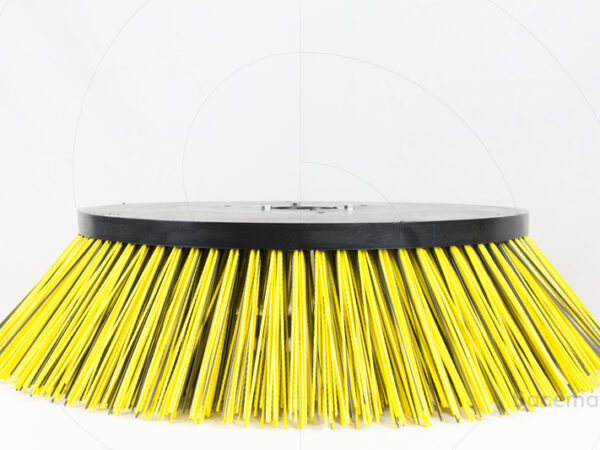
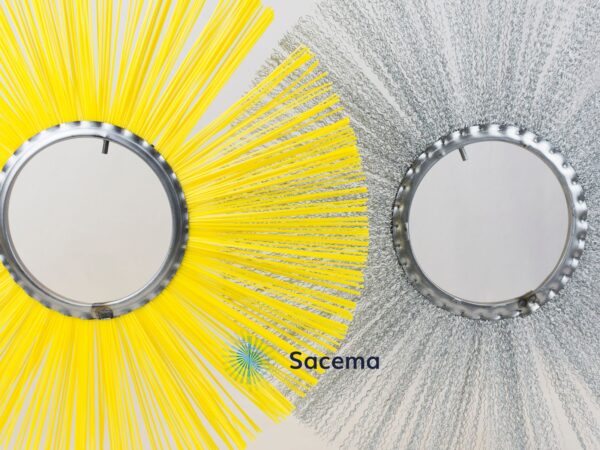
The most common application in this sector is the sweeping of streets and public spaces using sweeping machines. These machines typically use a combination of side brushes and center brushes to collect debris from the road surface. Side brushes are responsible for moving debris toward the center of the machine, where the main brush collects it and directs it into the suction or collection system. The main brush collects and evacuates the debris, and is usually incorporated alongside a vacuum system that deposits it into a specific container. The filaments used in these types of brushes are usually high-resistance polypropylene (PP), as they offer good durability against the wear caused by continuous contact with the pavement. In applications where it is necessary to increase sweeping capacity, brushes with a mixture of plastic filaments and steel wire are also used, providing greater aggressiveness when removing heavier or compacted debris.
Highway and public works cleaning
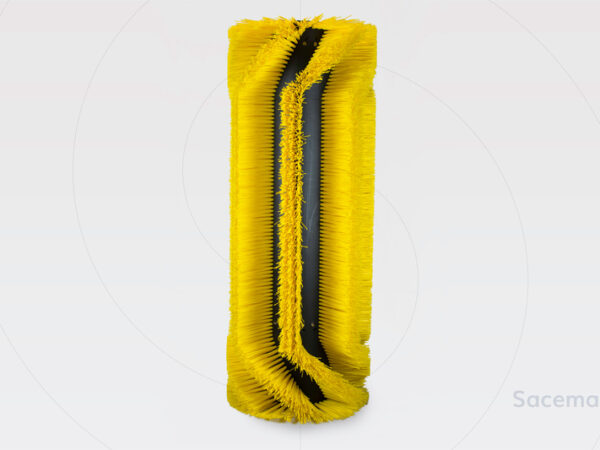
In highway maintenance work, industrial brushes are used to remove accumulations of sand, gravel, or material debris primarily from construction sites. These applications require brushes with a greater sweeping capacity and wear resistance, since the debris is usually heavier and more abrasive than in conventional urban cleaning. Large-diameter cylindrical brushes are common in this type of machinery. These brushes can incorporate combinations of plastic and steel filaments to increase their effectiveness, or consist entirely of steel. These types of solutions are used in highway cleaning equipment, road maintenance machinery, or high-capacity sweepers.
Industrial and port area cleaning
Industrial areas, logistics parks, or port facilities often accumulate heavier debris, such as industrial dust, packaging remains, sand, or transport materials. In these environments, cleaning machines equipped with brushes designed to work under highly demanding conditions are used. Side brushes allow large areas to be swept efficiently, even when the debris is bulkier or heavier. The most common filament remains high-resistance polypropylene, although in certain applications, combinations with steel are used to improve the sweeping capacity.
Leaf and organic waste removal
During certain times of the year, especially in autumn, streets and urban parks can accumulate large amounts of leaves and organic waste. Street cleaning machines equipped with industrial brushes allow this waste to be removed quickly and efficiently. Polypropylene filament brushes are typically used in these applications, as they allow debris to be collected without damaging the pavement or generating excessive dust. These types of brushes are particularly useful in urban areas with delicate pavements or pedestrian zones.
Regulations and Materials for Street Cleaning Brushes
Although street cleaning is not subject to specific regulations, there are technical requirements related to operational safety, material durability, and cleaning equipment efficiency.
One of the most important aspects is the selection of the filament material. The brushes must offer a suitable combination of wear resistance, flexibility, and sweeping capacity.
Polypropylene (PP) is the most widely used material in this sector due to its good mechanical resistance, moisture stability, and competitive cost.
In applications where greater sweeping aggressiveness is required, combinations of plastic filaments and steel wire are used, increasing the capacity to remove compacted or encrusted debris.
Furthermore, the brushes must be designed to withstand variable environmental conditions, including rain, dust, extreme temperatures, and prolonged sun exposure.
The brush design must also adapt to the mounting system of each machine, ensuring secure installation and stable operation during sweeping.
Regulations and Materials for Street Cleaning Brushes
Although street cleaning is not subject to specific regulations, there are technical requirements related to operational safety, material durability, and cleaning equipment efficiency.
One of the most important aspects is the selection of the filament material. The brushes must offer a suitable combination of wear resistance, flexibility, and sweeping capacity.
Polypropylene (PP) is the most widely used material in this sector due to its good mechanical resistance, moisture stability, and competitive cost.
In applications where greater sweeping aggressiveness is required, combinations of plastic filaments and steel wire are used, increasing the capacity to remove compacted or encrusted debris.
Furthermore, the brushes must be designed to withstand variable environmental conditions, including rain, dust, extreme temperatures, and prolonged sun exposure.
The brush design must also adapt to the mounting system of each machine, ensuring secure installation and stable operation during sweeping.